I never met Father Andrew Greeley--Chicago priest, sociologist, public intellectual, best-selling novelist, Catholic gadfly, Irish storyteller. I wish I had. Just about anybody who was anybody in the Catholic Church over the past 50 years did--and each had an opinion on him.
Father Greeley died May 29, at the age of 85. Four years ago he was getting out of a cab in Chicago, his topcoat caught in the door, he fell and hit his head. New reports said he survived the fall and subsequent surgery, but with some brain injury, from which he never really recovered.
My recollections of him are reading his books, scholarly articles, and newspaper columns, and gobbling the interviews he gave to other media.
I first encountered him in my freshman year of college seminary in the 1972 document commissioned by the American bishops, The Catholic Priest in the U.S.: Sociological Investigations. It was my first foray into the world of sociology, and it was fascinating to me, especially as I was discerning a vocation to be one of that group which Greeley and his companions researched. He got a couple of other books out of that research too. This led me to an earlier book, Uncertain Trumpet: The Priest in Modern America. Later works I gobbled up included The American Catholic: A Social Portrait, Religion: A Secular Theory, and Unsecular Man.
In Greeley's works I encountered that huge, and still debated, dichotomy of secular society vs. religious society. I was hard put to understand (at the time) his landing on the "secular" side of things. But I came to agree with his perspective. I still remember his very short definition of religion: "man's [sic] propensity to hope." But what he said about religion in general, and the Catholic Church in particular, resonated with me and my experiences, personal and ecclesial.
Greeley's unabashed embrace of the Second Vatican Council as a positive work of the Holy Spirit began to permeate my thinking. He welcomed the liturgy in the vernacular (while disparaging the liberal priests who wanted to throw out all the "religious symbolism" of vestment, ritual, and heritage). He advocated greater resources to preserve Catholic schools (when the religious women were leaving educational ministry in droves, and when the public school lobbies were ignoring the students' high test scores and off-the-charts college graduation rates). He made fun of the liberal social workers and advocates of liberation theology, while contending that Catholic education was far more effective in alleviating poverty. He made fun of the conservatives who thought the Catholic Church was going to hell in a very speedy handbasket. Greeley was neither left nor right, but -- ha!ha! -- in his own mind always right.
Through his friendship with Chicago philosopher and priest David Tracy, and his primary optic of "the analogical imagination," he produced The Catholic Myth. His critics said it was over the head of most Catholics. So he watered down the language (but not the theology) and produced The Great Mysteries: Experiencing Catholic Faith from the Inside Out. I still think these two books can contribute to any adult Catholic's understanding of the faith.
I drifted away from his sociology, but like so many others was taken up with his first novel to hit it big, The Cardinal Sins. I gobbled up many of his early novels, and later the Blackie Ryan mysteries. I can still remember one night while I was serving at St. Pius V Parish in McKeesport, going to bed with some Andrew Greeley novel (I read every night before I fall asleep). At 5:30 a.m. I finished it, listening to the birds stirring outside my window and seeing the first pre-dawn light. "Damn you, Andrew Greeley, you did it again! I lost another night's sleep to your stories!"
He was not much of a stylist, even pedantic and pedestrian in his language, but his plots of church life, steamy romances between husband and wife, unseemly affairs going on in the chanceries and Vatican, were imagination grabbers. These dozens and dozens of novels gave rise to the humorous insight that "Andrew Greeley has never had an unpublished thought--or sexual fantasy!"
When I read his autobiography, Confessions of a Parish Priest, what I had been thinking became clear to me. Just as a son who is continually put down by a verbally abusive father grows up to want to be the same father, Greeley the priest wanted desperately to be named a bishop, even though at every turn he did his best to point out all the stupidities, faults and sins of contemporary bishops (with the singular exception of Cardinal Joe Bernadin, his friend). Talk about a love-hate relationship.
It was the same way with his Irish heritage. He embraced it fully, but only from the American context. I have to admit that his excessive and continual emphasis on his Irish heritage left me cold. As the son of parents of Eastern European stock, I could not relate to "the troubles," the drinking, "lace curtain vs. pig-shit" Irish divisions, or the obvious historical fact of Irish domination of the American Catholic hierarchy for 150 years.
But in the end I admired Andrew Greeley for going his own way, using his energy, intelligence, and imagination to serve the church, this Chicago parish priest who was ordained the same year I was born, who loved the priesthood and loved priests.
May you rest in peace, Father Greeley, among all the angels and saints from Ireland and every other land in the very loving Mystery of God.
Thursday, July 4, 2013
New members of the Communion of Saints
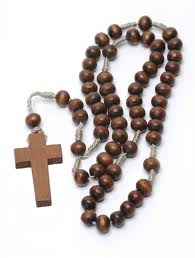
When I pray the rosary, at the end I usually add on my own personal listing of favorite saints, and holy men and women whose lives I admire. I don't remember where I got the idea, but it is greatly consoling to bring these holy and loving saints to mind.
My listing of saints: Francis of Assisi, Clare of Assisi, Cosmas & Damian, Joseph the Worker, Ambrose, Ignatius of Loyola, John of the Cross, Teresa of Avila, Juan Diego, John Vianney, Therese of Lisieux, Our Lady of Guadalupe, Seat of Wisdom, Queen of Peace.
My listing of holy women and men: Blessed Pope John XXIII, Cardinal Joseph Bernadin, Archbishop Oscar Romero, Bishop Wilhelm Emmanuel von Ketteler, Bishop Francis Baraga, Bishop Vincent Leonard, Msgr. Jack McCarren, Msgr. Phil Murnion, Msgr. Jack Egan, Fathers Donald Voelker, Joseph Henry, Raymond Brown, J. Berchmans Lanahan, Francis Seelos, Jack Price, Frank Sokol, Karl Rahner, Sister Marge Berry, and Dorothy Day.
(I know, I know, the second group is very clerical and has few -- one! -- laywoman and one woman religious. I'm working on it.)
Over the past several weeks, three clerics died, whom I think I will have to include in my list: Father Andrew M. Greeley, Bishop Joseph Sullivan, and Bishop Anthony Bosco.
I'll do a posting on some personal reflections on each one.
Monday, July 1, 2013
Marriage and Matrimony
The other day the U.S. Supreme Court issued two rulings which will affect our country for generations to come. One was to identify a key part of the 1996 Defense of Marriage Act unconstitutional, and the other was to choose not to rule on the question of same-sex marriage in California. On the one hand, the court did not take the obvious step, and order the federal government to redefine marriage as the union between two persons, not a man and a woman. It left this decision to the states. But 12 (at last count) states have already done this--redefined marriage as the union of two persons, not of a man and a woman. The battles are already shaping up for legislatures in many other states to repeat this re-definition. Surely more states will be added to the list.
In private conversations among friends and priests, I have held the view for years that the way out of this dilemma is for states to keep marriage as the union of one man and one woman, but to create civil unions to allow two men or two women to have the same civil legal rights as married people do. That is, rights involving inheritance, taxation, health decisions, etc. For a while I thought this argument was going to win the day. This preserved our country's (and our Christian faith's) commitment to seeing marriage (between one man and one woman) as a social good, yet permit those homosexually oriented persons who wished to have some kind of permanent bond to do so. Their unions would come out from the shadows into civil law.
But voices advocating for so-called gay marriage argued, civil unions are "separate but equal," with all the opprobrium that this distasteful and terrible phrase from our racist past carries. This argument, civil unions are separate but equal, doomed marriage to be redefined. The voices for gay marriage said, rather, the issue is equality. This was noted by no less than His Eminence, Donald Cardinal Wuerl, in an op-ed piece in the Washington Post on June 28. He wrote:
Some have framed this debate in terms of "equality." That rings with a certain American appeal. Everyone wants to be treated equally, with the love and respect due all people. But focusing on "marriage equality" gets the question wrong. Equality requires treating like cases alike. We need to determine whether we have "like cases" at all. If we want to address the principle of equality correctly, we need to get to the truth of marriage first.
Cardinal Wuerl then goes on to offer the traditional definition of marriage. He concludes firmly:
No matter what a court, legislator, president or voter may claim to the contrary the essence of marriage cannot be redefined. Its meaning is intrinsic, grounded in human nature and discoverable by human reason with or without the aid of faith.
This is the traditional Catholic understanding and teaching about marriage. Cardinal Wuerl explains its Thomistic logic, with his usual clarity of expression. I agree 100% with this teaching, as the Catholic Church has taught it for centuries.
And the United States courts, legislatures, and people aren't buying it. "Equality" will win the day, every day, in our country. "Separate but equal" --in matters of race, gender, or now marriage--is dead and never to be accepted again. Those who stand for the traditional definition of marriage, whether Catholic, Christian, people of another faith or no faith, are forced to live with the reality that marriage now, and will, mean any state-sanctioned union between two persons.
You can see this change in the definition of the word marriage in dictionaries. Dictionary.com defines marriage as
1. a legally, religiously or socially sanctioned union of persons who commit to one another, forming a familial and economic bond;
a. the social institution under which a man and woman establish their decision to live as husband and wife by legal commitment, religious ceremonies.
b. a similar institution involving partners of the same gender.
The online American Heritage dictionary is similar
1a. the legal union of a man and woman as husband and wife, and in some jurisdictions, between two persons of the same sex usually entailing legal obligations of each person to the other;
1b. a similar union of more than two persons;
1c. a union between persons that is recognized by custom or religious tradition as a marriage;
1d. a common law marriage.
Note that in the first, the union is of "persons," and only in the second line is "man and woman" spelled out, as one among several options for the persons. The second definition has "man and woman" first, but also "between two persons of the same sex." It is interesting that the American Heritage definition also has "similar union of more than two persons," e.g., polygamy or polyandry.
I pulled out my two ancient American Heritage (real book) dictionaries off my bookshelf, to look up their definitions of marriage. The 1981 edition has this definition of marriage:
1a. The state of being husband and wife; wedlock.
1b. The legal union of a man and woman as husband and wife.
2. The act of marrying or the ceremony of being married; a wedding.
The 1993 third edition of the American Heritage dictionary reads:
1.a. The legal union of a man and woman as husband and wife.
1.b. Wedlock.
1.c. A wedding.
Note in both definitions it is explicit that marriage is between a husband (man) and a wife (woman). Same-sex marriage (two persons) and polygamy (more than two persons) as other meanings had not crept into the dictionaries. Between 1993 and 2013 they did.
Which brings me to my one thought. In the 1981 American Heritage dictionary, there is a wonderful add-on to the stated definition of marriage, synonyms. This is the authors's attempt to help the reader in being precise about words that are close, but not exactly the same, in meaning. Here it lists: marriage, matrimony, wedlock, wedding, nuptials. To distinguish, matrimony "applies to the state of being married, with emphasis on its religious nature."
Given the redefinition of marriage now going on in the courts, the legislatures, and our American culture, I think it is time for us Catholics to reclaim the word matrimony. The American bishops, among many voices, have for years tried to say, You can't redefine marriage. It is, as the archbishop of Washington said, intrinsic to the meaning that the word can only apply to one man and one woman. But that ship sailed. Marriage is redefined, in law and in common parlance. Marriage is no longer the word used to precisely and clearly refer to one of the seven sacraments. Let us use matrimony to mean (as the 1983 Code of Canon Law states) this definition.
The matrimonial covenant, by which a man and a woman establish between themselves a partnership of the whole of life and which is ordered by its nature to the good of spouses and the procreation and education of offspring, has been raised by Christ the Lord to the dignity of a sacrament between the baptized. (Canon 1055, #1)
It is interesting that the Latin word translated marriage or matrimony (as best I can see, interchangeably in the Code of Canon Law) is matrimonium. I have to admit, over the years I have never liked the word matrimony. To me it had a stuffy, snooty, Episcopalian ring to it, denoting only the most "high-church" ceremonies conducted for royals, with the most lavish of party afterwards. As a Catholic priest, I've been privileged to witness the vows of couples in cathedrals and other large churches, but also in small chapels and with the least amount of ceremony. All were loving expressions of the same sacrament of marriage.
But I have changed my mind. From now on, I will be using matrimony when describing the Catholic sacrament, and marriage for any union of any persons.
As I was preparing this blog post, I came across this response to the U.S. Supreme Court decisions mentioned at the top.
It is becoming increasingly and abundantly clear that what secular law now calls 'marriage' has no semblance to the sacred institution of Holy Matrimony. People of faith are called to reject the redefinition of marriage and bear witness to the truth of Holy Matrimony as a lasting, loving and life-giving union between one man and one woman.
This is from Bishop Thomas Paprocki, head of the Diocese of Springfield in Illinois. I couldn't have said it better myself.
Return to the world of blogging
It has been seven days since the Chicago Blackhawks won the Stanley Cup in Boston, with the ridiculous and fabulous come-from-behind victory of two goals in 17 seconds, in the final 1:17 of game 6, which I saw with my own two eyes in the comfort of my living room, and yet still can hardly believe.
Of course, as the few of you who follow this wandering blog know, two months ago I predicted that our flightless birds, the Pittsburgh Penguins, would be the ones to win 16 games in two months and hoist the 35 pound cup. It didn't happen. We only got to eight wins, derailed and defensed by the Bruins in four very frustrating games. Boston went on to the finals, to face Chicago. For the first three games, it looked like the Bruins defense was doing to the Hawks what they did the the Penguins. But the Hawks rallied, attacked the great and tall defenseman Zdeno Chara, won the final three games as their offence (the equal of Pittsburgh's) woke up, and persevered to win it all.
Our stars, Crosby and Malkin and Letang and the backup goalie Vokoun and rentals Iginla and Morrow, didn't come through, our coaches didn't make the adjustments, and we only scored two goals in more than 12 periods of play.
What a disappointment.
And so we are left with the memories of a great season, finishing second in points in the entire league, winning the Atlantic Division, going the entire month of March without losing--so close, and yet so far.
The ceremony of the handshake at the end of each round is one of the great things about NHL playoffs, and in all professional sports. How hard it must be to be a sportsman, especially if you are the loser.
I think I had a dose of depression after the Penguins' loss. It brought back another memory. In 1995, when the Steelers lost to the Dallas Cowboys in Super Bowl XXX (with woebegone Neil O'Donnell's two unexplainable interceptions), I was depressed for a week. Probably longer than most of the players, and coach Bill Cowher.
My wise teacher from Duquesne University put my feelings into perspective, when I shared my disappointment days after the conference finals. He said, the reason I felt so bad is because there was so little riding on the outcome. It is easy, as a fan, to invest yourself heavily in the results of your favorite sports team, because in the end it does not affect your life. If it did, you would not dare to invest yourself so deeply.
So, after an absence of two months, I'm back to blogging, back to life, back to allowing myself not to be hurt by any professional team. (Yes, I'm talking to you, our 2013 amazing Pittsburgh Pirates. I almost never thought I'd hear the sentence, "The Pirates have the best record in major league baseball," in my lifetime. But the All-Star game is still two weeks off.)
And I hope the Penguins win the Stanley Cup in 2014.
Wednesday, May 1, 2013
Fearless Stanley Cup Predictions
Expectations are always troublesome. Expect that something will happen, that some team will win, and it usually doesn't end up that way. As my spiritual director taught me on the long retreat, "Expectations are the seedbed of resentment."
Ask the Las Vegas bookies, and the Pittsburgh Penguins are expected to win the Stanley Cup. They have the two best players in the world (Crosby and Malkin), a deep and talented team, a Cup winner in goalie Fleury and coach "Disco" Dan Bylsma, great end-of-season additions in Iginla and Jokinen and Murrow, and 22 wins out of 26 games played going into the playoffs.
Yet most writers I've seen like the Chicago Blackhawks, the #1 team in the Western Conference of the National Hockey League, and the winner of the President's Trophy for most points in the season, to win it all.
I hate when our hometown teams are expected to win. The pressure bends the players, inflates egos, and usually brings about a big fall. (See, the Pittsburgh Penguins, one year ago.)
But...going against the grain, and my usual pessimistic nature, I am predicting that our flightless birds will win the 2013 Stanley Cup.
Here's the details:
In the Eastern Conference
Penguins (1) over Islanders (8)
Canadiens (2) over Senators (7)
Capitals (3) over Rangers (6)
Maple Leafs (5) over Bruins (4)
Penguins over Maple Leafs
Capitals over Canadians
Penguins over Capitals
In the Western Conference
Blackhawks (1) over Wild (8)
Ducks (2) over Red Wings (7)
Sharks (6) over Canucks (3)
Kings (5) over Blues (4)
Blackhawks over Sharks
Ducks over Kings
Ducks over Black Hawks
Stanley Cup finals
Pittsburgh Penguins over Anaheim Ducks
Go Pens!!!
Thursday, April 11, 2013
Diocesan Connections
Two of the parishes I pastor, St. Vincent de Paul and St. Vitus, are pioneer parishes in the diocesan-wide "Our Campaign for the Church Alive!" This is the $125 million initiative which our bishop began a year ago. We are two of 11 parishes which are in the first group to approach parishioners and aim for a diocesan-set target. I'll mention more about this effort after our intensive four-month push ends for these two parishes at the end of the month.
Tonight I was addressing a small group of parishioners we invited about the campaign. (Well, actually we invited a very large group of parishioners, by letter and robocall, to hear how they could make a pledge to the campaign, but only six came). One of the perennial issues in anything "diocesan" is the feeling in New Castle, and throughout Lawrence County generally, "The bishop doesn't know anything about us. The diocese has forgotten us."
It gets a little tiresome answering this irritating whine. Especially in my case, since for nine years of my priesthood, I "was" the diocese. That is, I was one of the "honorable guild of diocesan bureaucrats," in the words of my late friend and racquet ball opponent, Father George Newmeyer. I was one of the "them" in the oft-repeated conflict between "us" parishes and "them" diocesan idiots.
So in response to a question tonight, I offered this response to the claim, the diocese doesn't know anything about us or doesn't care about us:
I wish that anyone who moaned that the Diocese of Pittsburgh does not know about St. Vitus Parish, or the other parishes in New Castle, would have been with me over the past 24 hours.
- Yesterday, I received a letter from Dr. Robert Pacerba, the diocesan Secretary for Catholic Education. He informed me that for the third year in a row the Bishop's Education Fund would make a grant to St. Vitus School in the amount of $115,000, the same as the past two years. That's $345,000, more than a third of a million dollars, given to our school in the past three years.
- Today I talked with the chief financial officer of the diocese, Fred O'Brien, about an issue with the church roof for another of my parishes, St. Joseph the Worker. He was very supportive of a proposal my finance councils and I have proposed to the diocese to fund and repair the leaks and improve the building.
- I also talk with one of the diocesan attorneys, Chris Pontecello, about Mary Mother of Hope Parish selling a piece of land, and the practicalities of the transaction. Because of the Parish Share Program, I don't hesitate to talk with any of the diocesan lawyers, since unlike usual practice in the secular legal world, the parish is not billed for the phone calls or advice of the attorneys, or their preparation of contracts.
- Last night I taught the third in a four-week series on Catholic social teaching, for the diocese's adult education program, at St. Joseph the Worker Parish. This program gives certification to Catholic school teachers, volunteer CCD catechists, and solid formation in the faith to parishioners. I have been a master catechist in this program since my third year of priesthood. Thousands of Catholics learn more about our faith each year through its many courses.
- I got another email from our regional vicar, Father Phil Farrell, about an upcoming free lecture for members of pastoral councils, finance councils, and parish staff, on the issue of collaboration among parishes and consultative processes. Father Phil is a big supporter of our unique arrangement of parishes here in New Castle.
- This afternoon I received a call from Father Joe Mele, the rector of St. Paul Seminary and director of the pre-ordination formation of our candidates for the priesthood. Last year two parishes, St. Vitus and St. Vincent de Paul, received the help of a first-year seminarian intern, Chris Mannerino. With the support of my two associates, I "pushed the envelop" and requested of the diocese two seminarians to help in our four parishes this summer. I hoped to get Chris back for a second year, and another one to boot. Father indicated that it is likely we'll be granted our request, which has to be approved by the bishop.
This is just one day, albeit an unusual one. Most parishioners do not interact with the bishop, or members of diocesan central administration. Priests do. I do, often. I wish that parishioners understood how the diocese often (but not always!) helps us in the parishes, and particularly me in New Castle.
Only with healthy relationships with the diocese can we in the parishes (priests, staff, council members, parishioners) do our job of being church well. Only by telling stories like this might I gradually break down the false statement that "the bishop and the diocese forgot about us long ago."
Back at the Computer
It's been a while since I posted a blog (well, actually, 26 days, but who's counting except the accountants?). I have many excuses--Palm Sunday, Holy Week, the Great Three Days of Easter, our parishes's participation in the diocesan-wide capital campaign (more on that to come), getting my taxes done. But most of all... well, I have no excuse.
So back to the computer.
Subscribe to:
Posts (Atom)